
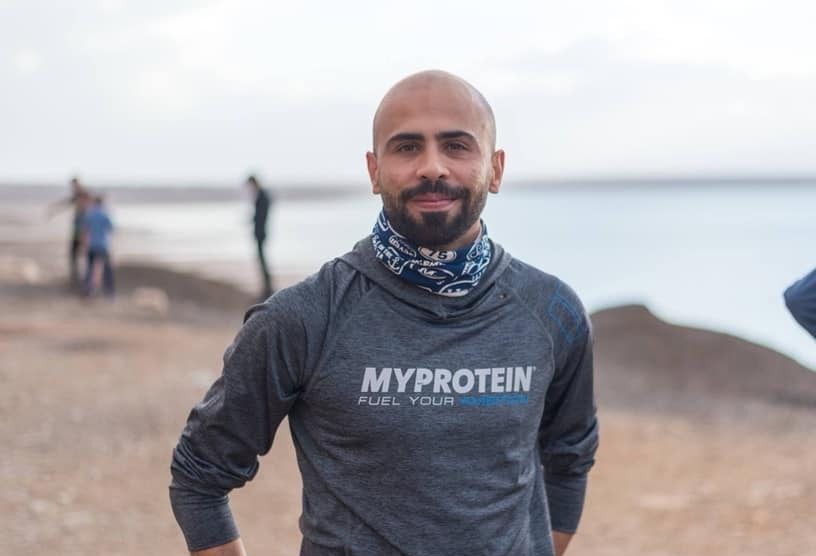
Willpower in the Womb of Pain – Osama Rababa / Part One
My name is Osama Rababa, and you can follow my Instagram and Facebook accounts via the following links:
https://www.facebook.com/osama.marketing/
https://www.instagram.com/osamarab/
The Beginning
I started playing sports when I was twelve years old. At the time, I was living with my family in Qatar. I joined one of the country’s youth clubs and was always committed to training, even at the expense of my studies and academic performance—which, unlike my brothers, were not particularly strong. At the same time, I was an outstanding soccer player; I always trained with the older age groups, which gave me a lot of experience that my peers in my own age group lacked. The biggest obstacle to my athletic success was my family, my father, to be specific, who always wanted to see me focused on my studies rather than sports. Even when I was selected to join the Qatar national team, he wouldn’t budge and wouldn’t allow me to attend practices, claiming that it would negatively affect my academic progress, which ultimately led to my exclusion from the Qatar national team. One of the consequences of that exclusion was an even greater estrangement between me and my studies; I hated them even more than I had before. How could I not, when they were the reason I was cut from the Qatar national soccer team—a dream of every young athlete, or even a veteran one?
We left Qatar and returned to Jordan in 2002. I was fifteen years old at the time. I applied to several Jordanian clubs to join their teams, but I was surprised when they all rejected me, claiming that my skill level wasn’t good enough to play on their teams. I got over it and started looking for another sport, until I found my way to the taekwondo dojo. In less than a year, I earned my red belt and began preparing for the black belt exam. However, a quick, powerful movement during one of the drills—a high-rising kick—resulted in a tear in my hamstring. I still suffer from some of the aftereffects to this day. Of course, this injury forced me to give up taekwondo for good—a new setback for a young man in the prime of his life who was striving for excellence in sports.
I enrolled in college and, at the same time, was hired by one of Jordan’s largest companies, so I had to manage my time carefully and set aside at least a little time for my studies. This forced me to give up sports, except for the occasional soccer game with my college classmates and friends in the neighborhood where I lived.
The Pain
Toward the end of my time in college, when I was a senior in my fourth and final year, I began to feel a longing to return to club sports, so I visited the taekwondo club hoping to rejoin it. However, severe pain below my knee—extending up to my thigh and down to my lower back—prevented me from keeping up with the exercises. I saw one doctor, then another, and then several others, and they all agreed that my leg was healthy and sound. As the pain worsened, I consulted other doctors; I underwent several tests, X-rays, and physical therapy sessions, all of which came back normal, yet the pain did not subside. and it intensified every time I tried to do any kind of exercise, so I was forced to stop all forms of exercise.
After graduating from college, a memo was sent to the company’s email announcing its plan to form a running team. I applied to join the team and was invited to participate in the training sessions. Since I had previously played soccer and practiced taekwondo, running was a familiar and routine activity for me, as I was used to running distances of up to ten kilometers. In pain and discomfort, and relying entirely on painkillers and injections, I began training with the team at Al-Hussein Sports City in Amman. It wasn’t long before the company announced its intention to participate in Race Held annually over a distance of 242 kilometers, divided into a relay race among ten runners, the “Dead2Red” race runs from the Dead Sea to the Red Sea. The company announced that it would organize a competition to test the abilities of applicants in order to select the best among them to join the company’s team. The applicants were tested and the team was selected; I was not among them. Those chosen were a mix of Jordanians and foreigners, all of whom excelled at running. It was clear that for them, running was not just a sport but a way of life; they stood out for their ability to run long distances at high speeds—at least relatively speaking. Held annually over a distance of 242 kilometers—divided into a 10-runner relay—is the “Dead2Red” race from the Dead Sea to the Red Sea. The company announced that it would organize a competition to test the applicants’ abilities and select the best among them to join the company’s team. The applicants were tested and the team was selected; I was not among them. Those chosen were a mix of Jordanians and foreigners, all of whom excelled at running. It was clear that for them, running was not just a sport but a way of life; they were distinguished by their ability to run long distances at high speeds—relatively speaking, at least.

My leg problems persisted, so I was forced to see more doctors and undergo more tests and X-rays, but the doctors still couldn’t figure out what was wrong. Then a family friend suggested a doctor, saying he was highly skilled and known throughout the city for his diagnostic precision. I saw him right away. He asked me for some X-rays and lab tests. I did everything he asked and brought the results back to his office. He opened the envelope, held the X-ray up to the light, widened his eyes, and asked me sharply, “Do you really exercise?” I said, “Yes.” He said, “With this leg?” He didn’t wait for an answer to his question; instead, he held the X-ray up to the light again and pointed to the spot he wanted me to look at. The bones in my leg near the thigh were severely eroded over a ten-centimeter area—a medically rare condition. He told me it required urgent medical intervention and that the previous doctors’ diagnosis had been inaccurate, in fact, it was wrong.
The doctor began explaining the stages and details of the surgical procedure to me. It involved implanting calcium pellets in the eroded area, but, as he said, the most difficult part was the postoperative period, since it required my leg to remain in a cast from the ankle up to the upper thigh for nine months. One of the risks was infection if my body rejected the implanted pellets. This news had a negative impact on my mental state, which deteriorated significantly. Just two days before the surgery, I went out to meet some friends to say goodbye, since I wouldn’t be seeing most of them for the next nine months. During the procedure, I felt severe fatigue and dizziness, which caused me to lose consciousness. I didn’t come to until I was in a hospital bed suffering from a very high fever, which was caused by my difficult psychological state.
My stay in the hospital wasn’t the best; the pain in my leg forced me to take a lot of painkillers, which caused me stomach pain. I complained about this to the nurses and doctors, and some of them diagnosed me with appendicitis. The doctor insisted on performing surgery to remove it, I was certain that my problem was related to the large amount of painkillers I had taken and had nothing to do with my appendix, so I refused to undergo the surgery. Thank God, my decision was the right one.
A few days later, I underwent a calcium implant procedure. When the anesthesia wore off, I opened my eyes, I didn’t feel the pain that had plagued me for years, but who knows—I was still under the influence of the anesthesia. Five days passed without pain, except for some soreness from the incision, but I wondered throughout those days whether the painkillers I’d been given played a role in that.
I was discharged from the hospital and returned home, where I was forced to stay in bed. I had a supply of painkillers to manage any potential pain, which I took on schedule as prescribed by my doctor. That same day, I felt extremely tired and weak, followed by difficulty breathing, and within minutes my entire body went into spasm.
My brother’s wife, who is a pharmacist, checked the medications that had been prescribed to me and found that one of them is prescribed for heart patients and has severe and dangerous side effects. They contacted the doctor and explained my condition to him; he confirmed that I was experiencing side effects from one of the medications, but he could not say for certain which one was the cause. Therefore, he ordered that all painkillers be discontinued and that I be taken back to the hospital immediately. I was rushed there by the Civil Defense, unconscious, with my leg in a cast from top to bottom. The pain that followed that day was unbearable; without the painkillers, the pain pierced every cell in my body, tearing me apart and knocking me down with every passing minute, which felt like an eternity.

The days passed, and my pain began to stabilize and then gradually subside. The nine months dragged on slowly and heavily, and the day came to have my cast removed. The doctor came, removed my cast, and told me that starting that day I would begin physical therapy. He also instructed me to take calcium supplements and consume dairy products, and warned me in a stern tone that I was forbidden from engaging in any athletic activities. He said, “There are two things you need to know.” The bad news was that, with a high probability, I would not return to how I was before and would not be able to walk normally as I had before. The good news, however, was that the calcium implants had fused well with the bone in my thigh, which meant the surgery had been a success.”
With the help of crutches alone, I was able to move from one place to another; I wasn’t allowed to walk on my own two feet without them, nor could I have done so—my thigh muscles were weak and atrophied, unable to support a child. but I was determined not to give up and to keep trying to walk on them again. I tried and tried until I felt some strength returning to them, so I got rid of one of the crutches and used only one. My goal was clear: to exercise the thigh muscle that had been severely affected during the previous period so that it could regain its strength.
My condition improved, and I was able to get rid of my second crutch. Although the doctor had warned me against exercising, I started going to the sports complex to walk. Weeks went by, and eventually I began walking at a brisk pace. Little by little, I started Run running with a noticeable limp in my injured leg, I started with just a few minutes—which gradually increased to about an hour. I began with one day a week, and eventually it became three to four days a week. Those days and minutes were my breath of fresh air and my refuge from what I was going through; I truly looked forward to them with the eagerness of a child awaiting a holiday. As I continued with the exercises prescribed by my doctors—walking and then jogging—my condition improved significantly. My doctor couldn’t believe the dramatic turnaround that had occurred, so he asked me at my follow-up appointment, “What did you do? There’s a dramatic improvement I can’t explain.” I replied, “I was running.” He said, “Didn’t I tell you not to exercise? But in any case, what you did is interesting.” Your thigh muscle has improved in a way I never imagined—it’s even almost back to normal. But be careful: don’t run too much, and don’t do high-impact sports like soccer or taekwondo, as that could cause the calcium deposits to break or become damaged.”
End of Part 1. Stay tuned for Part 2 of Osama Rababa's story about running next week.
A truly wonderful story about the kind-hearted hero Osama Rababa. Brother Marwan did a brilliant job telling this story, and it’s the best example that nothing is impossible—with willpower, determination, and a spirit of defiance, anything that seems impossible can become possible. All my love, respect, and admiration go to the hero Osama 👍👍 👍❤❤❤🌹🌹🌹
May God grant you continued health and well-being, Osama, beloved of the people