How far did the players run during the 2026 World Cup?
Do you know how far the players ran during the 2026 World Cup?
The curtain fell on the 2026 World Cup, and the Spanish national team—beloved by many in our Arab world—was crowned with the most prestigious title and the crown jewel of all trophies: the World Cup.
In every World Cup match we watched, there was one statistic that rarely appeared on the screen: how many kilometers these players ran, both individually and as a team.
Official FIFA Data For the 2026 World Cup, these figures reveal the exact details. The questions posed by Arkad are: How long would it take an airplane to cover the distance run by World Cup players? How much fuel would a car need to cover that distance? And how many pairs of running shoes would it take to replicate it?
Official Number
A total of 1,039 players actually took the field (starters and substitutes) in the 2026 World Cup matches, across 104 games—the first edition in the tournament’s history to feature 48 teams.
The total distance covered by these players combined was 23,877.95 kilometers.
Comparison with the Earth's Circumference
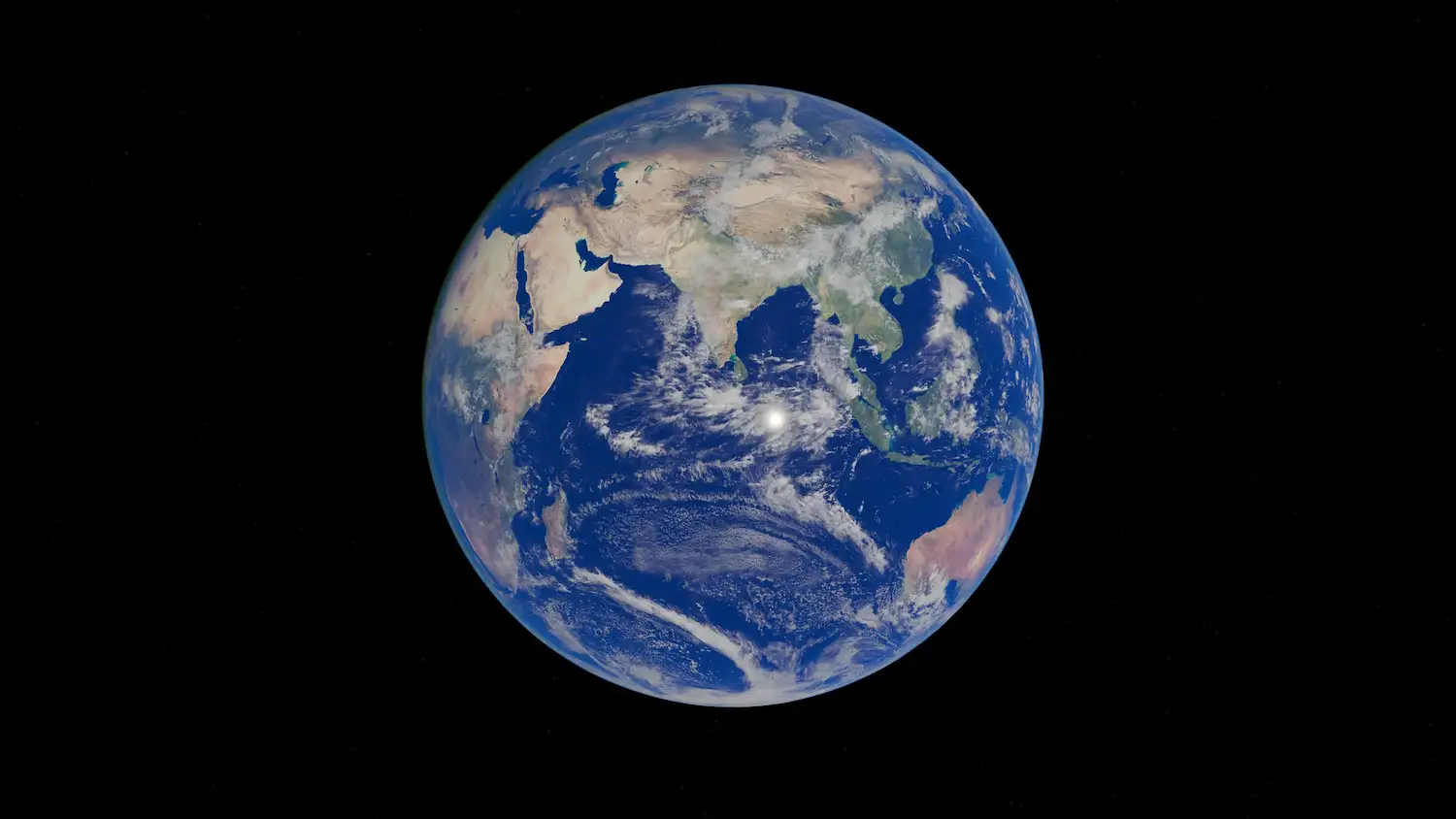
The Earth's circumference at the equator is 40,075 kilometers. In other words, during the 2026 World Cup, the players ran a distance equivalent to about 59.6% of the planet's entire circumference.
Who are the players who run the most?
FIFA's individual rankings reveal one name that tops the list by a clear margin:
| Ranking | The player | The National Team | Distance |
| 1 | Rodri | Spain | 96.23 km |
| 2 | Alexis McAllister | Argentina | 90.56 km |
| 3 | Mark Kookoria | Spain | 87.99 km |
| 4 | Bao Kobarsi | Spain | 85.96 km |
| 5 | Michael Olisi | France | 84.50 km |
It is noteworthy that three of the five players on the roster are from Spain’s “Red Matador” team, which is indicative of a tactical philosophy based on constant movement and high pressure throughout the match.
How can we visualize this distance?
To put this into perspective and make these numbers more tangible, here’s how much time and fuel each mode of transportation needs to cover the distance mentioned (23,877.95) kilometers:
| The Medium | Speed or Reference | Time or Quantity Required |
| Commercial aircraft | Approximately 900 km per hour | Approximately 26.5 hours of continuous flight time |
| Aircraft Fuel Tanks | Approximately 14,000 km per tank | Approximately 1.7 tanks |
| A car on the highway | Approximately 120 km per hour | Approximately 199 hours, or 8.3 consecutive days |
| Car Fuel Tanks | 700 km per tank | Approximately 34 tanks |
| Elite Cyclist (Tour de France Pace) | 40 km per hour | Approximately 597 hours, or 25 consecutive days |
| A person walking | 5 km per hour | Approximately 4,776 hours, or about 199 consecutive days |
And now, from the perspective of the running world
This is where the number becomes the real story of “I Run”:
| Reference | The Account | Result |
| Sebastian Soei (World Champion, world record holder with a time under two hours—“1:59:30”—in Marathon (London 2026) | One marathon = 42.195 km at the world record pace | Sebastian Soey would need to run approximately 566 marathons in a row—the equivalent of 47 days of nonstop running—to cover the same distance |
| Running Shoes | Professional shoes last for about 700 km before they need to be replaced | You'll need about 34 pairs of shoes to complete the distance |
| Energy Sources (Energy Gel) | Assuming an amateur runner runs at a speed of 10 km/h and rests every 45 minutes | This is equivalent to approximately 3,184 jel of energy. This is an estimate based on a runner covering the same distance at a steady pace, not the actual energy expenditure of the players, who alternate between running, walking, and sprinting during the game. |
| Training volume of an elite runner (Sebastian Soi himself, averaging 200 km per week in the last six weeks before breaking the record) | 23,877.95 km ÷ 200 km per week | Equivalent to approximately 119 One week of training equivalent to that of an elite runner—that is, more than two years (approximately 2.3 years) of continuous training |
Why Is This Number Important to the World of Running?
Soccer is a team sport played with a ball; behind every pass and every goal lies an enormous physical strain that closely resembles what long-distance runners experience. The players you follow every four years are, in terms of raw physical effort, runners in the truest sense of the word—but with a ball at their feet and a crowd watching their every move.
This is the thread that connects soccer and running; at their core, both are stories of endurance. Even a world-record-holding champion, if he ran at top speed without stopping, would need 47 full days to cover the distance that 1,039 players collectively covered in a single month of competition.
Run… Your Story 🏃